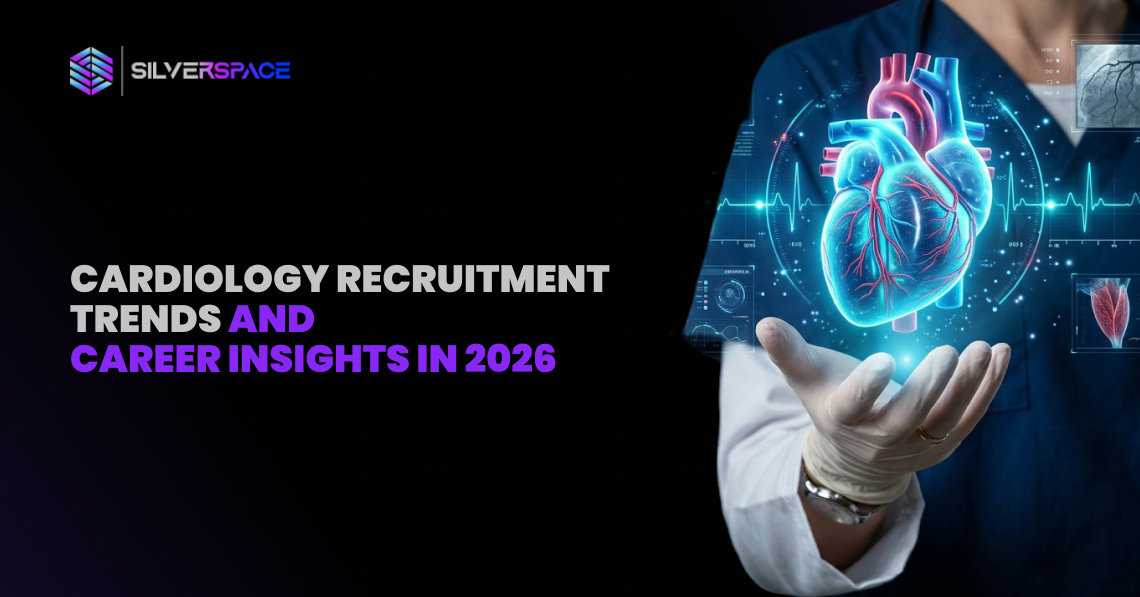
Cardiology is one of the most in-demand specialties in healthcare right now, but finding and keeping cardiologists is becoming harder every year.
Hospitals are recruiting. Clinics are increasing their capacities. The number of patients keeps rising. But the number of cardiologists? It is not increasing at the same rate.
And in 2026, the pressure is even higher.
But this isn’t just about shortages. The way cardiology hiring works is also changing. Technological innovations, flexible practice models, retention strategies, and even career expectations are changing the market.
If you are hiring cardiologists or mapping out your career in cardiology, it is important for you to understand these changes.
This blog will give you a breakdown of the latest trends in cardiology recruitment and their impact on healthcare organizations and professionals in 2026.
What Do You Mean By Cardiology Recruitment?
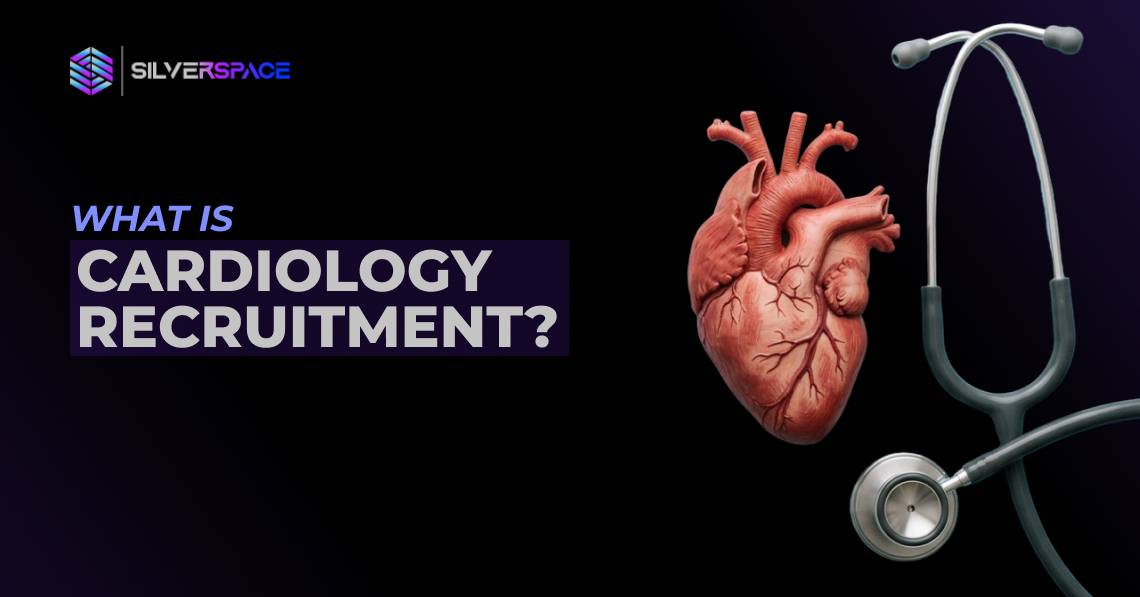
Cardiology recruitment means finding cardiology healthcare professionals, hiring, and keeping them working for the healthcare organization. The professionals can be interventional cardiologists, non-invasive cardiologists, electrophysiologists, cardiac imaging specialists, and other similar roles.
Healthcare organizations are competing with each other for a cardiologist talent pool for an ever-increasing patient demand. Similarly, cardiologists are seeking better work-life balance, flexible working times, higher remuneration, and a friendly working environment.
That’s why recruitment today involves much more than posting jobs. It is all about workforce planning, retention strategies, speeding up the hiring process, and making long-term connections with healthcare professionals.
In simple terms, cardiology recruitment now is about not only identifying the right talent but also convincing them to stay.
Cardiology Recruitment Trends
Cardiology hiring is changing quickly in 2026. Here are some of the biggest trends shaping cardiology recruitment right now:
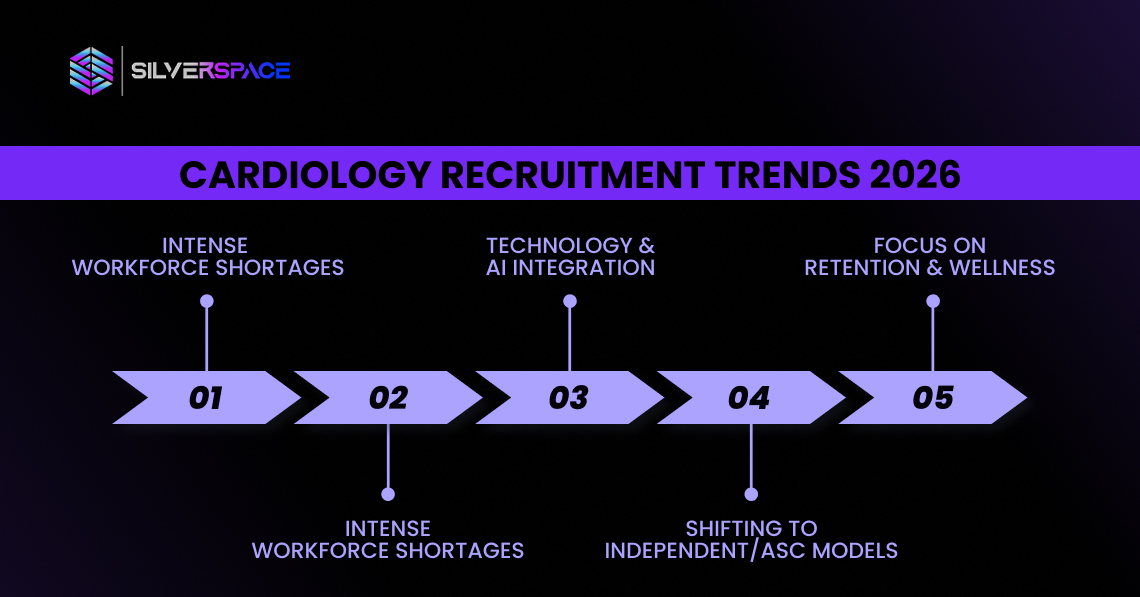
1. Intense Workforce Shortages
The demand for cardiologists continues to rise, but the talent pool is limited. Healthcare organizations are struggling to fill open roles, especially in rural and underserved areas.
The scarcity is leading to the rise of competition among the different hospitals, clinics and private practices. The hiring processes are being delayed and retention is gaining more importance.
2. Interventional Match Rate
Interventional cardiology remains one of the most competitive subspecialties. Fellows matched to this specialty show how the need is high, but the supply of well-trained professionals is low.
To attract candidates even before they graduate, healthcare institutions are making offers of better compensation, more flexible working hours, and greater professional development opportunities.
3. Technology & AI Integration
Technology is changing both cardiology care and recruitment. AI tools are helping healthcare organizations in cutting down their hiring times, raising the efficiency of scheduling, and workforce planning.
Similarly, cardiologists are now required to have the ability to use advanced imaging systems, electronic documentation, and AI-supported diagnostic methods.
4. Shifting To Independent/ASC Models
More cardiologists are exploring independent practice models and ambulatory surgery centers (ASCs). Many professionals are looking for greater flexibility, control, and work-life balance outside large hospital systems.
This shift is creating new recruitment challenges for traditional healthcare organizations trying to retain talent.
5. Focus On Retention & Wellness
Healthcare organizations are realizing that hiring alone is not enough. Burnout, workload pressure, and long hours are pushing many cardiologists to reconsider their work environments.
Because of this, wellness programs, flexible scheduling, and mental health support are becoming a bigger part of recruitment and retention strategies.
Why Cardiology Hiring Is Challenging
One major reason is the increasing demand for cardiac care services. As the number of patients grows, healthcare providers are compelled to hire more cardiologists, but the pool of such highly skilled professionals is far from being sufficient.
Another challenge is burnout. Due to heavy workloads and other stressors, many cardio specialists do not want to work anymore and they are seeking opportunities that can offer great work-life balance and flexibility.
Also, specialized cardiology roles require very specific skills and experience. It is not easy for healthcare organizations especially those in small towns and rural areas to get the right person for the job.
What This Means For New And Experienced Cardiologists
If you’re starting your career in cardiology, this market brings both pressure and opportunity.
The demand for skilled cardiologists is strong, which means there are more career options available than before. At the same time, the pressure to perform will be quite high. Medical organizations want to staff with people who are able to learn how to use new devices, deal with changed procedures, and meet patient needs that are constantly changing.
For practicing cardiologists, the focus is shifting beyond salary alone. Flexibility, work-life balance, growth opportunities, and workplace support are becoming major factors when choosing where to work.
It also means that healthcare institutions need to change the way they attract and keep the best professionals. Attractive salaries can get attention but real job satisfaction will be what makes people stay and not think about quitting.
Final Thoughts
Recruiting cardiologists in 2026 is all about identifying the right healthcare professionals, providing them with the necessary support, and forming teams capable of managing the increasing patient load.
The problem is that the shortages, burnout, competition, and evolving workforce expectations are all changing the hiring environment. Still, those organizations that change early will have a much better position ahead.
Therefore, choosing the right hiring partner is crucial.
At Silverspace Inc. USA, we help healthcare organizations connect with qualified cardiology professionals through smarter and faster healthcare staffing solutions. As the best healthcare staffing agency in the USA, we focus on helping you reduce hiring pressure, improve retention, and build stronger healthcare teams.
Catch you in the next blog, or maybe while helping you build your healthcare team with us.
FAQs
Q- What are the new technologies in cardiology?
A- New technologies in cardiology include AI-assisted diagnostics, wearable heart monitoring devices, remote patient monitoring, and advanced cardiac imaging systems. These tools are helping doctors detect and manage heart conditions faster and more accurately.
Q- What are the top 3 trends in the healthcare industry?
A- Some of the biggest healthcare trends in 2026 are AI-driven operations, virtual care expansion, and flexible workforce models. Healthcare organizations are also focusing more on retention and employee well-being.
Q- What’s new in cardiology in 2026?
A- In 2026, cardiology is seeing more use of AI, minimally invasive procedures, and remote cardiac monitoring. There is also a growing focus on preventive care and technology-driven patient management.
Q- Does cardiology have a future?
A- Yes, cardiology continues to have a strong future demand due to rising heart-related conditions and an aging population. The field is also evolving with new technologies, creating more opportunities for specialists and healthcare organizations.